ESL Schools Market in Boston: Competition, Students, and Policy Challenges
September is traditionally the start of the academic season in the United States. In 2025 this tradition remains unchanged: universities and language schools across Boston opened their doors to thousands of new and returning students. For Boston — often called the student capital of the country — September is not only the beginning of classes but also a key moment for measuring demand, competition, and the flow of international students.
Alongside world-renowned universities such as Harvard and MIT, a large number of commercial ESL schools compete for international students. Against the backdrop of declining enrollment in higher education due to visa restrictions, these schools are gaining more relevance.
Market Scale and Statistics
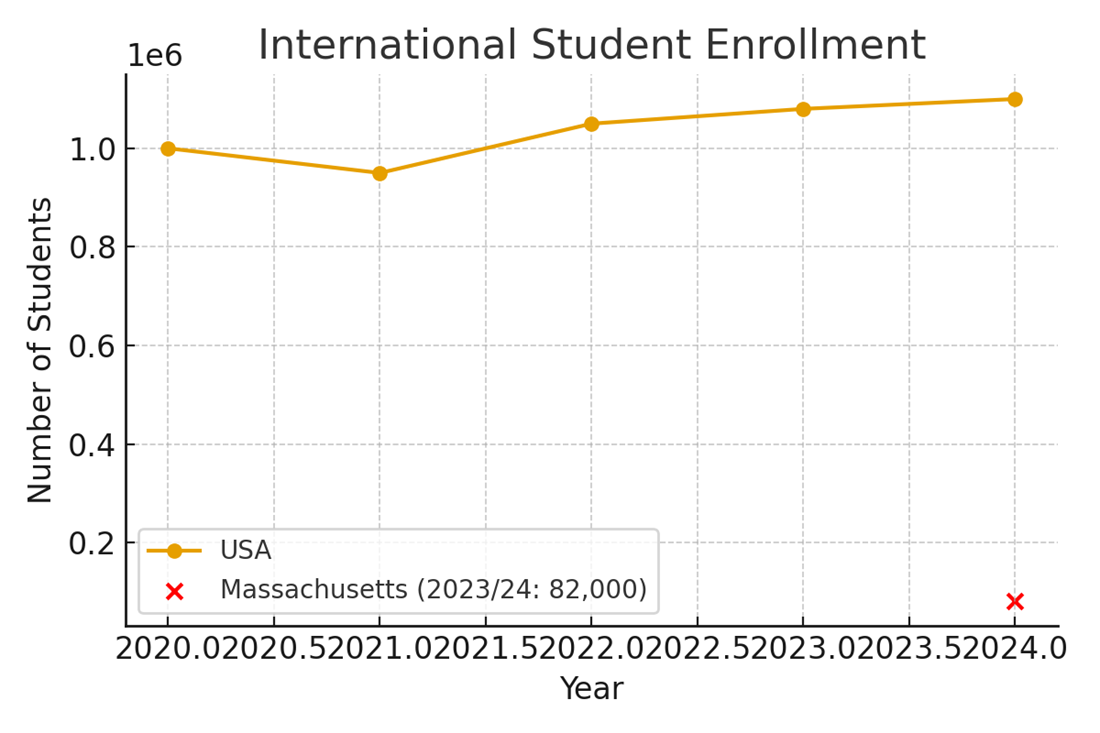
Figure 1. International student enrollment in the USA (2020–2024) with Massachusetts 2023/24 point. Source: IIE Open Doors, Boston Indicators.
Key Players in Boston
Competition and Student Distribution
Most international students come from China, India, Brazil, South Korea, and Vietnam (IIE Open Doors Data: https://opendoorsdata.org/).
– Kaplan benefits from global recognition and academic pathways.
– Approach competes with flexible formats and accessibility.
– Mid-size players maintain their place through academic focus.
– Smaller schools find niches via digital channels and community-based marketing.
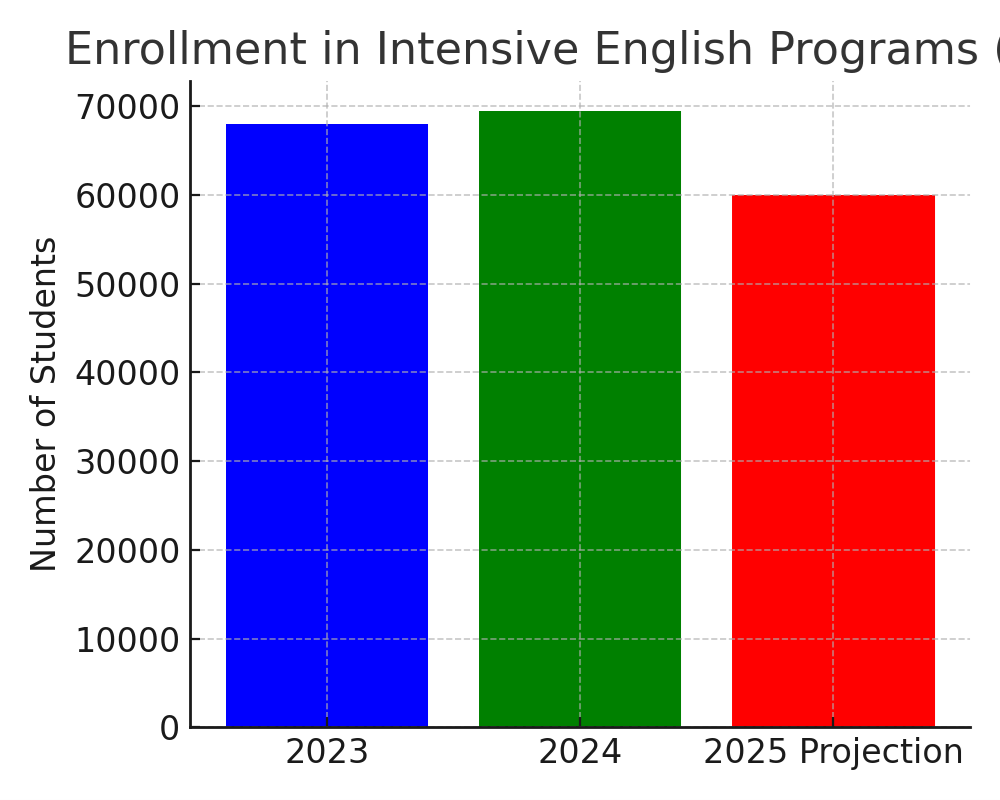
Figure 2. Enrollment in Intensive English Programs (IEP): fact 2023–2024 and 2025 projection (scenario). Source: IIE Open Doors, NAFSA.
Policy Impact
In 2025, the situation is challenging. According to Higher Ed Dive (https://www.highereddive.com/news/international-student-decline-fall-2025-projection/756500/), new international student enrollment could fall by 30–40%. The estimated loss for U.S. universities is $7 billion annually (NAFSA: https://www.nafsa.org/about/about-nafsa/us-economy-could-suffer-7-billion-loss-precipitous-drop-international-students).
Causes include visa delays, SEVIS cancellations, and increased social media checks (Washington Post: https://www.washingtonpost.com/education/2025/04/12/international-students-visas-revoke-fear/).
While this is a crisis for universities, it creates opportunities for commercial ESL schools. Students unable to enroll in degree programs increasingly turn to temporary ESL courses.
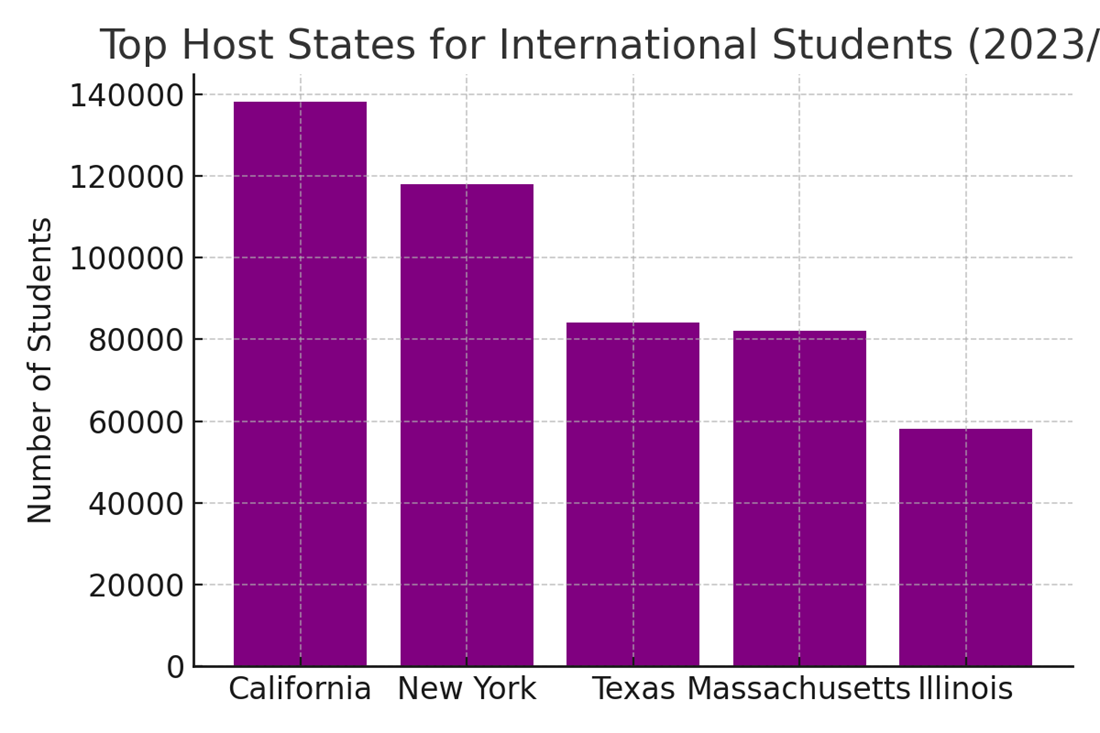
Figure 3. Top host states for international students, 2023/24. Source: IIE Open Doors State Fact Sheets.
Expert Expectations
Experts anticipate a difficult fall 2025. According to NAFSA (https://www.nafsa.org/fall-2025-international-student-enrollment-outlook-and-economic-impact), new enrollment may drop by up to 150,000 students compared to previous years. Delays in visa interviews are expected to continue, affecting key sending countries such as India, China, and Nigeria.
Nevertheless, demand remains high: Inside Higher Ed (https://www.insidehighered.com/news/global/international-students-us/2025/08/18/international-student-demand-remains-high-now) reports continued interest in U.S. study, even as visa frictions constrain some applicants. If visa barriers persist, more students may consider alternatives such as Canada, the UK, or Europe, or opt for online programs (ICEF Monitor: https://monitor.icef.com/2025/06/real-time-insights-on-shifting-international-student-interest-in-the-us/).
For Boston’s ESL schools, this creates a paradoxical situation: universities struggle, but language schools may gain as students seek temporary, flexible options.